































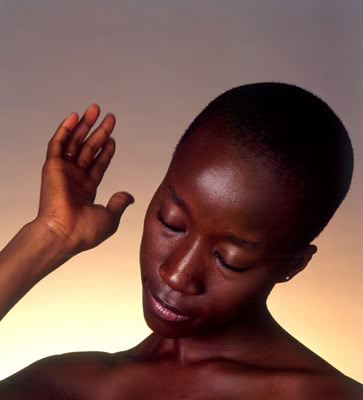

Mali’s Rokia Traoré was always going to be a welcome addition to the Sydney Festival lineup and it was with delight that the versatile songwriter from Africa was to present three specially-curated events. Sing-Dance-Dream (Donguili – Donke – Damou) were performed in three different venues with a distinct repertoire and musical backing
This evening the adventurous Traoré performed Dream (Damou) in the intimate setting of the magical Famous Spiegeltent. It involved an acoustic set with traditional storytelling that featured voice and traditional West African instruments, the kora and n’goni, made of wood or calabash with dried animal skin stretched over it. In other words it was akin to having an acoustic and bass guitar on stage.
As they gracefully entered, Traoré is dressed beautifully in what looks like a traditional Malian gown and she is flanked by two musicians, Mamadoba Camara playing kora and Mamah Diabaté on n’goni. Tonight was a gentle and rich acoustic tribute to Traoré’s Malian roots and the incredible history of her country in turmoil – much of which has been completely unreported here in Australia.
Damou (Dream) is her version of stories from the Epic of Sundiata, a poem that tells of the prophecies leading to the birth of Sundiata Keita, founder of the Mandé empire that spread across west Africa in the 13th century.
The narrative has been kept alive by the griots, Mali’s hereditary musicians and historians, although Traoré is not from a griot family. Nevertheless the performance would prove to be mesmerizing at times with her voice enveloping minds like a deep trance that thoroughly enchanted the whole audience.
She spoke intensely in English and this was interspersed with songs of each major event, where her voice would soar in the Bambara language. Traoré developed her distinctive vocal style without taking singing lessons, which was on clear display tonight where she exuded her overwhelming natural talent.
The daughter of a diplomat, Traoré’s worldly travels enabled her to craft and merge traditional Malian music with the sounds she discovered on her travels. It also lent to her “inventing new ways of singing”. The translations of her stories about hunters, spirits, and royal marriages were displayed as subtitles on a screen to both sides of the stage, as she occasionally raised her voice for dramatic effect.
Tonight the vocals are exquisite and clear, combined with the repeated riffs from the musicians they brought the Damou (Dream) to the audience. In some ways her expressions in the performance are theatrical and probably traced backed to her previous involvement in Desdemona, a theatre project.
The story telling was utterly compelling and a sign of Traoré’s respect for her country’s past. The songs were so simple yet lush that her incredible powerful voice left the audience in stunned silence for this unique show.
Perhaps the final words do belong to the artist. “Music is a way to share with people wherever you are, because it has no frontiers.”