






























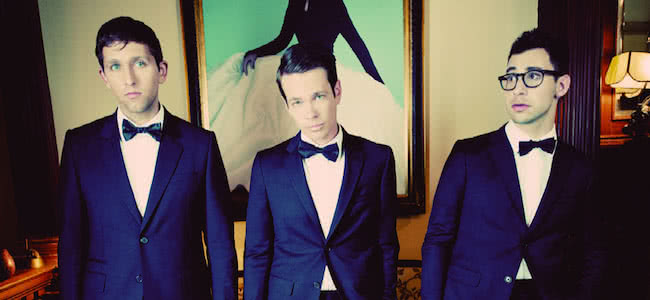

The letters F, U and N hang from three banners behind the stage set-up, as frontman Nate Ruess comes skipping out looking like a preppy college girl’s fantasy in a little t-shirt, suspenders and closed shoes sans socks (which he ends up removing half-way through the set).
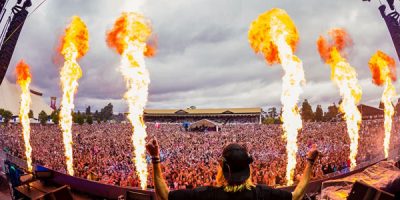
Multi-instrumentalist Andrew Dost (sitting behind three different keyboards) plays the cheery trumpet line of “One Foot”, transforming the Hi-Fi into a parade, its sold-out crowd taking on the part of the excitable onlookers, shouting “oh, oh oh!” along to the chorus. Ruess does a lot of fervent fist-pumping to the beat, inspiring the circle of people in front of him to follow suit.
fun.’s expansive and theatrical sound seems too vast for a venue such as the Hi-Fi, and there are no flashing lights, dancers or stage props to complement the music; the band just lets it speak for itself. At times, fun. dazzle and inspire, but at others, the crowd response is lukewarm.
A song like “Why Am I The One” is a great example of fun.’s ability to take one of the standouts from their most recent album, Some Nights and bring it to life in a live setting. Four-part chorus harmonies, Ruess spitting out frustration through melody (“Why am I the one/Always packing up my stuff?”), and tightly-controlled dynamics make for an irresistible sing-along. The smartphones are all out for this one.
There are a few songs that, perhaps because they were weaker to begin with or immediately follow on from a particularly compelling track, fail to impress. “It Gets Better” is one of them. These numbers are disjointed and jerky; on the record it can be interesting – but live, any production subtleties holding it together come undone and all that’s left is a tangled mess.
As performers, fun. are naturally engaging. Dost is serious in his approach while guitarist Jack Antonoff kicks around on stage like he’s chilling in his lounge room. Although Ruess’s stage banter is typical (comparing the Sydney audience to Melbourne – “I feel like you can do better tonight,” – and using “fuck” and its variations a lot); his dance moves and vocal delivery are consistently on point. He urges the audience to participate in hand-claps and whoah-ohs, and everyone willingly complies.
If there was ever any question that fun. manage to encapsulate universal, visceral emotions in the narrative of their songs, “The Gambler” silences them. Performed with only piano and acoustic guitar accompanying the vocals, it tells the story of Ruess’s parents’ life together. A tear-jerker for the fragile.
Before long, their hit “We Are Young” blows everyone away; it was made to be performed live. The audience sings every word, reinforcing the song’s message of the sentimental, idealistic feeling of being young and alive and wondering how many years of feeling like this we’ll have left.
“Take Your Time” follows, and after the flawless performance preceding, it feels flimsy. Although it’s undeniably a feel-good song and an uplifting ending, its hugeness is too contrived and indulgent after something like “We Are Young”.
The crowd stamps their feet for an encore and are treated to another highlight in the form of “Some Nights.” Dost singing those opening lines of vocoder is enough to make you hold your breath in anticipation. Ruess and the audience fist-pump to the chorus and it feels like a patriotic anthem. They finish with “Stars,” which by comparison has a ‘memorable credits song’ quality to it; it’s a drawn-out closing number.
Although the set was inconsistent and the song order questionable, overall, fun. live up to their name.
They aren’t afraid to take risks with their songwriting, and despite what your opinion is about their music (or any other commercially successful music), it is arguable that pop has never been more interesting.
Songs don’t have to be slow, sad, lyrically poetic or composed exclusively in a minor key to be meaningful or emotive. A hall filled with people shouting out as one is proof of that.
– Stephanie-Bowie Liew