































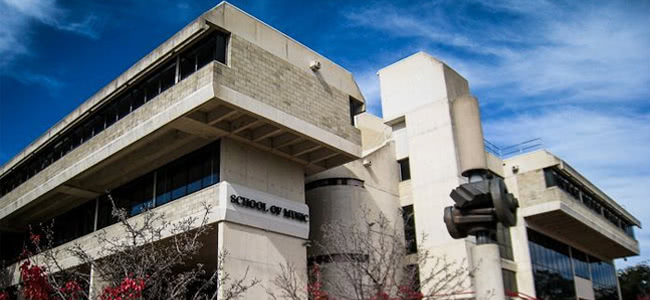

A former student turned teacher at the prestigious ANU School of Music has hit out at the school, describing the culture of the institution as “toxic” and recounting the bullying she and other staff have endured.
As Fairfax reports, Anne Ewing resigned from her post at ANU this week after 11 years teaching the Music for Colleges course. She’s now spoken out about the maladministration she reckons the school has developed under senior ANU management.
A veteran of the school, having completed her undergraduate, honours, and masters degrees at the school, Ewing says the school has suffered severely since a round of 2012 budget cuts, but this year saw morale hit new lows.
Former head Peter Tregear left suddenly in July with 18 months remaining on his contract. According to Ms Ewing, Tregear had made enormous strides in restoring confidence at the school and his departure was “crushing” for the staff.
“It was crushing when Peter left. He succeeded in getting the school back on track, he was committed to the staff and students, and to the School of Music as an institution, and he suffered enormously at the hands of management as a result,” she said.
Professor Tregear reportedly pushed back against management’s persistent understaffing at the school, which was precipitated by the budget cuts. As a result of the understaffing, several members of staff left.
According to the Canberra Times, four staff members took stress leave last year and eight have since resigned or announced their intention to leave ANU since then, not including Ms Ewing.
“Clearly there’s been a culture – a set of processes – in that school that has been highly stressful to both students and staff. That is going to change, that’s our commitment to actually make the change,” said ANU vice-chancellor Ian Young last month.
However, Young denied the school was under-resourced during crisis talks held with staff and students at the school. Meanwhile, in a public Facebook post, Ewing said she hopes the appointment of a new vice-chancellor will affect change.
“Remorseless toxic treatment, bullying, and silencing of its few remaining staff and even some students.”“My hope is that the appointment of Professor Brian Schmidt to the role of vice-chancellor in 2016 will affect a change of direction in the forced downward-spiralling of the school’s function and reputation,” she wrote.
Ewing said the school engaged in “remorseless toxic treatment, bullying, and silencing of its few remaining staff and even some students, the unresolved conflicts of interest between management and certain staff, and the shameless and deliberate delays in scholarship and prize payments”.
Ewing said she was owed thousands of dollars in music scholarship and prize money, which was not paid for up to five months. She was reportedly forced to pursue legal intervention before the money was paid to her.
According to Ewing, Professor Tregear had constant battled with management to have students paid out their entitlements and at one point became so frustrated he offered to personally lend close to $6,000 in owed money to a financially distressed student.
Ewing said the staff exodus and a significant fall in student enrolments to just 30 this year was “indicative of an institution that places no value on the pursuit of excellence in the field of music, but rather prefers a systematic annihilation of what was once a thriving community of musicians and scholars”.
“The staff that remain are trying their very best to do what they can under extremely trying circumstances while many of those who have left are constrained in what they can say by gag orders,” she wrote on Facebook.
[include_post id=”452832″]
“I am speaking out because very few people have been here as long as I have and at this stage I have genuine fears it’s being run down to the point it may not be able to be restored.”
Meanwhile, former senior lecturer in cello for 20 years, David Pereira said on Facebook that the school is close to extinction. Voicing his concerns in a series of videos, Mr Pereira said he was concerned for the school’s heritage.
“Now is a time for meticulous observation, for the examination of errors of judgment, for the telling of relevant truths, for apology to those necessarily or unnecessarily harmed, and for actions that are louder even than apologies… actions especially, I feel, that repair damage done to young student lives,” he said in one post.