






























At Tone Deaf, we’ve written in the past about the scourge of pay-for-play music festivals. Like any other industry, music has its share of ugly blemishes that mar what is otherwise a culture built around passion.
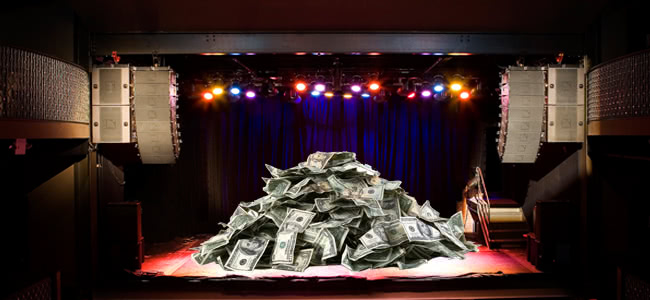
If you’re unfamiliar with the practice, a pay-for-play music festival is an event that asks the bands performing on the lineup to pay for the privilege, instead of playing in exchange for payment or exposure.
The number of pay-for-play festivals has been declining thanks to the internet’s role in helping bands and punters alike become more informed about the unscrupulous practice, but they certainly haven’t died off.
Back in May, Digital Music News published a report by musician Ari Herstand who decided to investigate the pay-for-play machine after he was hit up by the bookers of two separate pay-for-play music festivals, each touting legitimate headliners.
“Legitimate festivals make their money on sponsorships and ticket sales,” Herstand wrote. “Not off the backs of young bands who don’t know any better. Just because the promoters are incapable of securing enough sponsorship money to cover their costs is their fault. Not the artists.”
“If you move forward playing these festivals then you are just as much a part of the problem. Without the talent, these pay-to-play promoters have nothing. Remember that. If every band said no to pay to play it would end. The model would change. Let it start with you.”
Herstand made it clear what a pay-for-play festival is: “If anyone asks for a deposit or asks you to purchase tickets up front, it’s time for you to run the other way as fast as you can. It’s the promoter’s job to book a mix of talent that will draw the crowds…”
But we recently received an email that left us somewhat puzzled. The email was a release written by representatives for Scorcher Fest, an event organised by Karen King and Andrew Cooper, which has garnered a reputation as a pay-for-play.
[include_post id=”448102″]
“After coordinating nearly 75 Scorcher Fests one of these emails encouraged this response,” the email reads. “With the Scorcher Fest structure, acts have no cost to play. It’s a bit like crowd funding but with online tickets.”
“It works well for acts who are pro-active and don’t want to pay for possible venue costs, sound engineering, PA, ticketing, door person and back line.” The email goes on to defend Scorcher Fest’s ticketing model. So, what is the model? It works like this:
“Scorcher Fest asks that acts sell a minimum of 12 online tickets to be eligible to play. The acts then make $20 for each online ticket after the minimum 12 online tickets are sold, and organisers post out 30 physical tickets at no cost from which the acts keep all the income from the sale of these tickets.”
“Acts can request more physical tickets at no cost to them. There is also no cap to what acts can make. This helps to ensure that acts play in front of a good audience, and that the venue’s risk for putting on live original acts (often relatively unknown) is minimised and that venues can continue with live music for future events.”
The email then goes on to list the various ways in which Scorcher Fest’s singular structure benefits the bands involved. For example, “by allowing [acts] to take the responsibility to use their own creativity…”
“It obviously works for artists who choose to perform. This is shown by the number of return acts,” the email continues. “They take ownership of what they do, and if they don’t sell a minimum tickets which their fans pay for, the money is refunded to their fans, and they don’t play.”
“No one else gives this insurance in this kind of format. Venues like Scorcher Fest because acts don’t just play if they haven’t presold some tickets. Venues like to stay open for live music and appreciate acts who don’t just add to their expenses.”
“Scorcher Fest organizers give testimonials and referrals when asked, and most other requests if they can fit in the time. So there it is, the response to one email from Scorcher Fest. Karen and Andrew from and the Scorcher Fest team love helping acts help themselves.”
While it’s true most other pay-for-play festivals do not give hopeful acts ‘insurance’ in the form of refunding them if they fail to sell the required minimum number of tickets in order to play, but it’s dubious whether this means Scorcher Fest is not a pay-for-play festival.
[include_post id=”448947″]
It’s open for debate, but at the end of the day, organisers are not approaching acts with the offer of money or exposure and recruiting them for their festival. Bands have to sell tickets to the festival before they can play.
Sure, the money isn’t coming out of the band’s pocket (though it could be), the band is essentially collecting money and then handing it over to festival organisers. In that sense, what difference does it make where the money a band pays in order to play actually comes from?
The other element apparently separating Scorcher Fest from other pay-for-play events is allowing bands to take a cut of ticket sales after the 12-ticket minimum is sold. According to the festival’s website, Scorcher Fest tickets are $30 each, with bands pocketing $20 from each ticket sold.
Now the question arises: why would a band that is able to sell $30 tickets to their fans need Scorcher Fest? Wouldn’t a band at that level surely be able to book gigs with conventional promoters?
Obviously, Scorcher Fest is not a strict pay-for-play festival, but it’s important to open a dialogue about just what kind of position such an event occupies in Australia’s music scene. The more questions musicians ask, the better.