
































Ever since Guitar Hero showed lounge room rock stars how to tear it up on a plastic instrument, music and videogames have enjoyed a luxurious partnership.
While that flagship franchise and its spin-off series Rock Band have now burnt out and dissolved (just like real life rock bands!), the creators of the latter now have a new interactive vision for music that _____, while a European developer has turned to one of Manchester’s most influential bands for inspiration.
Mighty Box Games, an independent Maltese company, have turned to Joy Division for the development of a free-to-play, browser-based title inspired by arguably the band’s most famous song, ‘Love Will Tear Us Apart’.
Obviously basing a videogame on the gloomy post-punks isn’t going to equate to a Super Mario Bros clone with a peppy Ian Curtis as the main protagonist, and so it proves, with Will Love Tear Us Apart? described as a game “about relationships on the brink of breaking up… and follows the song in delivering a dark and frustrating perspective on love.”
“WLTUA encourages players to reflect on the darker side of love: mis-communication, emotional impasse and the sadness of separation,” reads the cheery ‘About’ section on the game’s website. “Solace may be found in the brief moment of lightness that comes over us when we come to terms with the reality of an irreconcilable relationship.
The game was created as a part of a project to adapt a song or poem into a videogame, with each level of Will Love Tear Us Apart? being based on a verse of the song with the lyrical themes reflected in a dark hand-drawn art style. (So not your typical game about chasing high scores or pwning n00bz, then?)
Creator/writer Gordon Calleja tells Consequence Of Sound he wanted to create “interesting tensions in the design process, resulting in scenarios which deliver the desired thematic experience whilst going against what is conventionally considered good game design.” The developers added, “what guides this game is an ambition to frustrate, upset and sting the player into remembering the dark days preceding the death of a relationship.”
Moving from the brooding and artistic to the more mainstream and colourful, a new franchise between Disney Interactive and Harmonix – the makers of the Rock Band and Dance Central series – sees the two developers pairing popular music with motion-based technology and a popular Disney franchise.
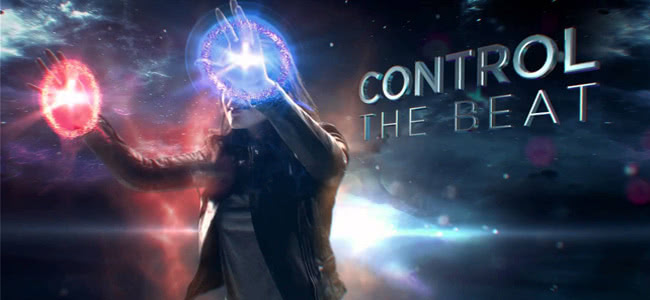
Fantasia: Music Evolved is headed to the Xbox 360 and Microsoft’s newly announced console, Xbox One, in early 2014 – as Billboard reports – and takes Disney’s Fantasia concept into the videogame world, allowing players to physically interact with components of individual songs with the use of the Xbox Kinect video camera and motion sensor technology, to create unique remixes of popular tunes.
So far the 30-strong tracklist includes Queen’s ‘Bohemian Rhapsody’, Kimbra’s ‘Settle Down’, fun.’s ‘Some Nights’, along with the likes of Avicii and Bruno Mars with more to be revealed when the game is showcased at the E3 expo, an annual technology and videogame conference, this June 11 – 13th.
The game visually references the original 1940 Fantasia film too by featuring sorcerer Yen Sid – the titular wizard from the iconic The Sorcerer’s Apprentice sequence in which Mickey lets loose magical powers that create a never-ending loop of water-collecting brooms. In the game’s narrative, players become Yen Sid’s new apprentice and hone their musical and magical prowess through a selection of contemporary music and immersive motion controls.
Players physically gesture in front of the screen to interact with the song’s assorted sounds and tracks, creating a ‘remix’ of the song that can be stored and replayed again, or remixed even further.
Meddling with such music recordings presented a challenge to developers Harmonix and Disney Interactive, who needed to secure multi-track licensing agreements with each song included in the game.
“The labels and artists that we’re working with have been fantastic in terms of their understanding of what we’re trying to do,” explains Disney Interactive Executive Producer, Chris Nicholls, “[we want] to be able to put music directly into people’s hands, so they can explore it, shape it and control it and be able to share that with their friends.” “The labels and artists that we’re working with have been fantastic in terms of their understanding of what we’re trying to do… to be able to put music directly into people’s hands.” – Chris Nicholls, Disney Interactive
Nicholls adds that Fantasia: Music Evolved could also act as a boon for recording artists looking to enhance fan experiences. “It really allows artists to put their music in a very different relationship with fans,” Nicholls adds. “It goes from being a passive or listening-based relationship to something that’s very active. When a fan can explore an artist’s work in a way they don’t get to in linear media. It becomes inherently more interesting.”
Hamonix Creative Director Matt Boch explains that he approached the game’s unique concept as a music fan himself. “What type of interaction would be interesting to give players? In early conversations there were some more formal notions being considered. Let’s think about tempo, timbre; let’s introduce people to all these theoretical concepts in all these things that they listen to, trying to react to the parts of the original film that are somewhat educational.”
Boch says that their new title is an evolution of the concept of the original Fantasia; “Walt’s vision was to take animation and gorgeous visual storytelling and tie that to this classical music that will bridge [people’s] perception of the music as lofty, erudite, inaccessible and make it more accessible. He thought this was a great way to listen to classical music.”
“When it came time for us to do the same thing, it was about letting people play with the component parts,” he says. “To give people an opportunity to do so is a way to increase the connection people have with music, which resonates with the original vision of Fantasia.”
The Rock Band/Dance Central developer also hopes that their newest music-based title will encourage more user-generated content, both in-game, and out. “If we can create more people who want to write songs or more people who want to download some programs and start making their own remixes and adding stuff to SoundCloud or what have you – any of those personal types of impact are a lot of what keeps me going,” says Boch.