





























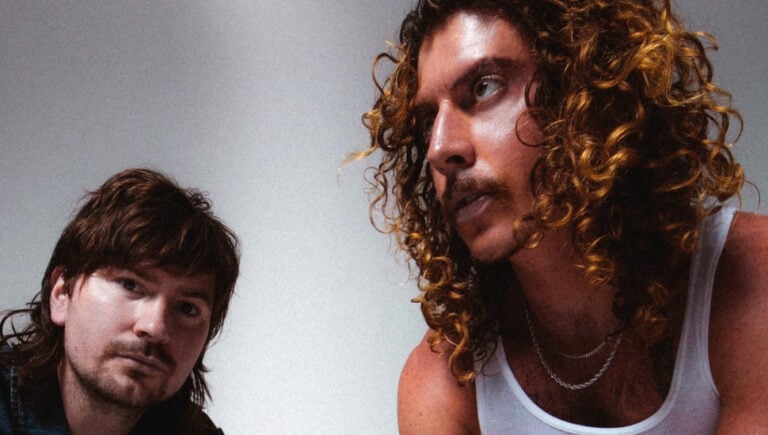

Peking Duk have taken aim at the rise of AI-generated music — and Australian radio — with an artificially reworked version of their 2014 hit “High”.
The electronic duo shared the deliberately synthetic-sounding remake on Instagram, pairing it with a pointed caption: “When you re-record your own song with AI so australian (sic) radio will play it.”
Originally featuring vocals from Nicole Millar, “High” became one of Peking Duk’s biggest releases, reaching the top five of the ARIA Singles Chart and earning widespread radio play upon its release.
More than a decade later, the duo’s tongue-in-cheek update appears to be less of a serious reinvention and more of a jab at both AI’s growing presence in the music industry and the increasingly complicated relationship between Australian artists and commercial radio.
Originally released in 2014, “High” became one of Peking Duk’s career-defining tracks, peaking at No. 5 on the ARIA Singles Chart.
View this post on InstagramLove Music?
Get your daily dose of metal, rock, indie, pop, and everything else in between.

While the post is characteristically playful, its timing taps into a much larger conversation about AI-generated music, radio airplay and the value placed on human creativity.
The duo’s parody arrives as the wider Australian music industry grapples with the commercial success of Australian DJ and producer Josh Fawaz’s AI-assisted cover of Madonna’s “Like a Prayer”.
The track has spent four weeks at the top of Australia’s national airplay chart and has generated more than 38 million Spotify streams. It has spent time at No. 1 on the ARIA Top 20 Australian Dance Singles Chart and No. 4 on the Australian Singles Chart, after previously peaking at No. 2.
Following an ABC investigation into the song’s creation, Fawaz added credits for generative AI vocals and AI drums. His 2026 album, Dance Like Nobody’s Watching, which features “Like a Prayer”, also entered the ARIA Top 20 Australian Albums Chart.
“I use AI as a tool,” Fawaz said in response to criticism of his work. “What I care about [is] providing my listeners with good music.”
He later demonstrated how he uses generative AI — namely Suno — in his ‘creative process’.
The disclosure came as Spotify began encouraging artists who use generative AI to declare it through a new beta feature. Spotify’s global head of artists, marketing and policy, Sam Duboff, discussed the initiative after the platform revealed it had removed 75 million “spammy tracks” over a 12-month period.
RMIT senior research fellow Sam Whiting previously said Fawaz’s recording displayed characteristics associated with AI music generators such as Suno.
“This is a very … impressive vocal performance if it was delivered by a human but if it’s not, that brings in really worrying questions around what we value any more in terms of human expression,” Whiting said.
The controversy has emerged alongside renewed political debate over how Australian artists, writers and other creators should be protected as artificial intelligence companies train their platforms on copyrighted material.
In a major speech delivered on July 15th, Prime Minister Anthony Albanese announced the establishment of a new Office of AI and Australian Standards. The office will build on work already taking place across government, including the Attorney-General’s ongoing review of copyright law.
“This world leading framework is about Australia choosing to shape the future rather than letting the future of AI shape us,” Albanese said.
“This framework is about protecting our national interests and ensuring certainty for growth, jobs and investment. If we set our national standards high, then we can make AI stand for Australia’s interests.”
APRA AMCOS CEO Dean Ormston described the speech as an unequivocal show of support for Australian artists and rights holders.
“The Prime Minister has made it clear. The future of AI development in Australia must respect creator rights, that permission and payment must be sought, and crucially, the creative economy must benefit from AI innovation and development in Australia,” Ormston said.
Ormston also welcomed the Attorney-General’s decision to rule out a copyright exception allowing AI companies to train their models on protected works without permission.
He said the government must now turn that position into “serious industry-to-industry licensing negotiations between platforms and rights holders, not further rounds of tech sector avoidance.”
ARIA CEO Annabelle Herd said creators must retain control over how their work is valued, licensed and used.
“The Prime Minister could not have been clearer: Australian writers and musicians keep ownership and control of their work,” Herd said.
“Artists control what that work is worth, not the Government and not a technology company.”
“This is clear message to AI companies: now is the time to get on with licensing. Right now deals are being signed across music, journalism and publishing around the world. Australia’s creative industries are ready do business.”