





























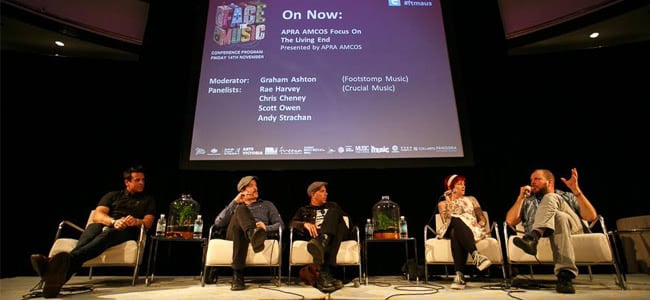

For this fortnight’s edition of How To, we caught up with Face The Music keynote speaker Ruth Daniel. Daniel is an internationally renowned Music Activist. Based in Manchester, UK, she is a cultural producer and entrepreneur whose projects range across the world, using music as a powerful tool for positive social change.
 Among many other astounding achievements, Ruth is the founder of Un-Convention, the global grassroots music event and community with a presence in 25 countries delivering over 75 music development events over the last seven years.
Her independent music journey started in her own local bands playing around Manchester and continued with her record label Fat Northerner Records, launched in 2003. With a strong DIY message for independent artists, Ruth is a go-to workshop curator and keynote speaker for music industry summits such as Barcelona’s Primavera Pro and Melbourne’s Face The Music.
“A guide to DIY for anyone in the music industry”.
Authenticity Is Integral
Make music for you, steal from what has happened before – but be true to yourself. The most amazing music sounds like where it is from. You recognise place, people and culture in the sounds.
By example: South African house music – Uhuru ft. DJ Buckz, Oskido, Professor and Uri-Da-Cunha “Y-tjukutja”
Have A Narrative
Be interesting. Be the band who… perform exclusively on rooftops or never release any recorded music. A band needs a strong, engaging narrative.
‘Gaggle is an all female “weird” choir from London in the UK. A purposefully, punk/amateur performance group, feminist, which has broken down traditional genres and received critical acclaim… Men very much played the guitars, ran the studios, managed, promoted and girls, in the main, were to be found on keyboards or taking their clothes off. That’s the context that created Gaggle. Something had to change and the most powerful way I could think of doing that was by putting 25 ordinary women on a stage and making them the stars of the show – not because they were extraordinarily attractive, or because they competed hard at having the X Factor and becoming famous, but because they were brilliant, interesting and had character – and together they were extraordinary and that’s Gaggle.’ Gaggle, UK (read more here)
Be Political
Talking about being in love is all very well, but your music gives you a platform to achieve so much more. Use your platform to make change, influence and affect the politics around you.
[include_post id=”459700″]‘We live in a world where every last piece of information you could ever desire to know is found on a screen right in front of you, yet the majority of us use this screen to socialize and indulge ourselves in the childlike entertainment facilities specifically set in place to keep us trapped, hypnotized and paralyzed. The internet can be a powerful tool to fight for peace and justice if we could only change our perception of its purpose.’ Jun Tzu, Northern Ireland (read more here)
Show Me The… Culture
Making music for money is always a bad idea. No one picks up a guitar for the first time thinking, this is going to make me rich. Music holds so much more than monetary value. Experiences you will never forget, friends and collaborations that will live with you until the end…
‘Hip Hop has taught me to stop thinking of success in monetary terms. My success has come from being recognized as an artist whose value is not measured in commercial consumer terms, but in real relationships and interactions that have advanced my personal growth and established my career. Hip Hop has helped to feed me at times, and also put me in the kitchen so others can eat.
As I have grown older and become more politically aware, I have found avenues of activism that Hip Hop culture has provided me with. I have been able to play a part in numerous solidarity actions and awareness campaigns that seek to serve and strengthen the social movements and civil society activities of various local and international organizations. I have done this all by producing and performing as a rapper and poet, by painting and designing as a Graffiti artist, and by organizing and activating as a Hip Hop head.’ Ewok, South Africa (read more here).
Collaborate
Digital tools allow us to make music in ways we have never been able to in the past. Work with others across the world, to make new sounds. ‘We do not follow a certain movement, we just do what seems logical to us and use what seems to be all around us: The possibility to connect. We communicate, meet people, work with them and become friends and allies. — And through that, maybe, we participate in something revolutionary.
What are the odds for a small musical project from Berlin to produce a debut album that features eleven different artists from eight different countries of four continents? What are the odds to travel around the world, from Russia to Palestine, tour in India, play all over Europe and even get invited to such inaccessible places like the townships of Harare and barrios of Caracas? Close to none, one could say. But just close, because all this actually happened in the last two years. Not because we are all that great, but because our time allows us to do it.’ Buddy, SYMBIZ – Berlin (read more here)
‘When my colleagues and I formed Debt Records we knew that the whole ethos of the label had to centre on collaboration – that every act should connect with every other act, that these connections should be emphasised and celebrated even more than the individual acts themselves. This notion was born from observing how bands we knew (and played in) would naturally come together after their various concerts and play late into the night around someone’s house. People began to look forward to these moments more than the shows themselves. The locations would change but the central premise remained the same. It was an entire music scene in one room – something natural and private and utterly honest.’ Louis Barabas, Debt Records, UK (read more here)