






























In Australian heavy music, longevity rarely happens by accident.
Scenes shift, venues close, international tours flood the market, and yet some bands manage to remain deeply embedded in the culture that shaped them.
For Hands Like Houses and Dream on Dreamer, that shared history runs deep, stretching back to the earliest days of both bands finding their place in Australia’s fiercely DIY alternative music ecosystem.
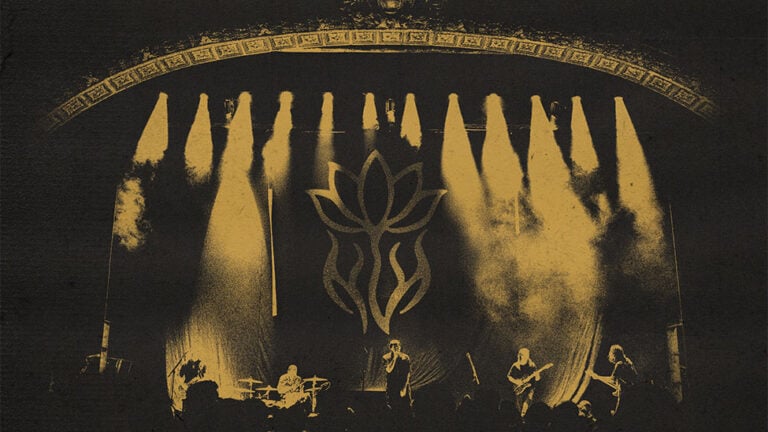
This April, the two long-time scene staples will hit the road together for ‘The Lotus Tour’. But rather than simply announcing a list of support acts, the bands took a different approach — opening the doors to emerging artists around the country and inviting them to apply for a chance to join the tour.
The initiative quickly snowballed beyond anything they anticipated.
“I think we’d been talking to Dreamer about support bands since announcing the tour and some of the bands that we actually were looking at originally weren’t available and it kind of made us zoom out a little bit and wonder if we could do something a little bit different here,” Hands Like Houses guitarist Joel Tyrell explains.
“And initially we just thought we’d go out and find a cool local for each show, but it kind of took off a little bit more than we were really imagining, hence why we actually ended up adding two to each show, just because we had so much to go through.”
Love Music?
Get your daily dose of metal, rock, indie, pop, and everything else in between.

Within just a few days, the initiative had drawn hundreds of hopeful applicants.
“It was crazy. We were sitting there thinking there’ll only be a few bands for each city. And I think at one point we got close to 350–400 submissions across three days or something, and we had to hustle.”
Behind the scenes, the band built a full system to catalogue and review every entry.
“I think I spent a day trying to work out how to get browser extensions so that we could download every single comment from different platforms to export for band names,” Joel explains.
“Then me, Coops and Parky jumped on a Zoom call for probably three or four hours reorganising data and pulling in all the information and making this huge spreadsheet, which is very useful to have now.
“Then what we ended up doing was going through all the different cities and listening to every artist and making notes. And then we discussed and compared. It was an intense week of listening to so much music and a lot of data organisation. But it was enjoyable. We made it fun.”
What began as a simple idea soon became something much bigger, and sparked a moment of reflection on just how many local Australian bands are currently trying to break through with limited opportunities.
“I think it was a bit of a lights-on moment for us to step back to the start of our careers and be like — wow, there’s so much music and so many bands out there that are just starved of opportunity. So it really just started and took off in a direction that we weren’t necessarily expecting, but were pleasantly surprised by.”


Dream on Dreamer vocalist Marcel Gadacz agrees the response revealed just how hungry local artists are to get involved.
“Yeah, that was really a great idea by the Hands guys to get everybody from the local cities involved, and it was good because it allowed people to jump on board and have an equal chance to be part of it,” he says.
“I mean the response was crazy, there were so many people trying to support the tour, which is awesome.”
For both bands, giving newer artists a platform is a reflection of how the Australian heavy scene has historically grown.
“Supporting local talent is something that people talk about all the time, but the reality is, if we’re not supporting local talent, how is the scene going to grow?” Joel says.
“If there’s always international touring, if it’s always the same bands, I don’t think it allows the opportunity for those bands to have those moments.
“For us, you never know — a band that we could bring out to support us, they could be playing arenas in two years time. I think it’s just really giving any band an opportunity to go on a stage and to be inspired. That not only gives them confidence but it strengthens the whole scene.”
Marcel sees it as a continuation of the same opportunities that once helped Dream on Dreamer find their footing.
“I always think back on the times when those support tours put us in a completely new kind of tier of touring band,” he says.
“If we didn’t get supported and given those chances at the start, then I don’t think we would have gotten to where we are. And like Joel said, you never know what’s around the corner.
“You see it all the time. What we did 10 years ago with bands that have now grown to a completely crazy size — they would have never imagined it back then because they were just opening our tours, but now they’re taking over the world stages, so it’s pretty cool to see.”
Those early opportunities still loom large in both bands’ memories. For Joel, one of the defining moments came completely by chance.
“As this process came up for us, it personally took me back to some of our first ever support shows that were of a notable size,” he recalls.
“And one that I remember quite fondly — this is going to be going back to at least 2009 maybe — but we were practising at our local rehearsal studio, and right after we finished rehearsal we found out there was a Boomtown Records showdown that was happening with The Getaway Plan, I think it was Angela’s Dish and someone else.
“One of the bands had gotten sick and I remember we pretty much got asked by the venue after we’d rehearsed if we’d want to play this show that night.
“At that time we’d never played a show to more than 10 or 20 people, and then all of a sudden we had this crazy opportunity to play with The Getaway Plan. The whole show was blurry because we were probably all freaking out.”
Moments like that eventually grew into bigger opportunities — including a pivotal early tour with Dream on Dreamer themselves.
“I think back and our first opportunity touring Australia was actually with Dream on Dreamer,” Joel says.
“It’s a funny full-circle moment where we’d met over in America, we’re both making records, and then later they brought us out on an Australian tour. That was kind of the start of it for us.”
“Yeah, I remember that,” Marcel laughs.
“We were just recording. We had no idea when we went over to record our first album that you had already been there for a few weeks. And it was just awesome that we both went to the same person.”
For Dream on Dreamer, their own early breakthrough arrived just as suddenly.
“I think we got asked way early on, when we first started touring, to be part of some crazy tours that we were not really in a position to even do,” Marcel recalls.
“I remember we got thrown onto an Avenged Sevenfold tour because the support band had pulled out and we got a call from our manager and they asked if we wanted to jump on the tour next week or something like that. It was super quick.
“So we jumped in the deep end, and we weren’t really ready for something like that. We didn’t even really know how to move around on stage yet at that time.”

For Joel, that first national run with Dream on Dreamer was also the moment Hands Like Houses realised they were stepping into something bigger.
“I think for us that tour with Dreamer in Australia was our biggest for that time. It was our first national tour where we did five or six shows, but it was the first time we actually felt like a proper band. We were on a proper tour.”
A few years later, Hands Like Houses experienced another pivotal moment after catching the attention of Pierce the Veil while touring the United States.
“We’d gone over to America and really put in some work there, opening tours to 20 people and then opening tours to 100 people. By chance, one of the guys from Pierce the Veil saw us play a show to maybe 50 people.
“The next day we got this tour offer to go and play with Pierce the Veil. We went from opening to 20 people to then playing thousand-cap rooms on tour for six weeks across America.
“That was another moment for us that really catapulted the start of our touring career for sure.”
Dream on Dreamer’s own turning point came in a very different setting: the red carpet.
“We got nominated for an ARIA award, and we got to actually go to the ARIAs. This was before heavy bands were even nominated at these kinds of events,” Marcel says.
“That was for our first album, and because I didn’t grow up in Australia, I had no idea what the ARIAs were. I got told the ARIAs were kind of like the ‘Grammys of Australia’.
“We sat next to Kylie Minogue’s family and I’m like, ‘Oh my parents listen to Kylie Minogue. I guess this is a bit more serious than I kind of thought it would be.’”
If anything, revisiting those memories only reinforced how important the current generation of artists is to the future of Australian music — even if the pathway looks very different now.
“I do think the future of Australian music is in safe hands, but our incentive really brought to light how difficult it is for bands coming up,” Joel says.
The modern touring ecosystem has also shifted heavily toward international lineups, something Joel believes can unintentionally squeeze local artists out of larger opportunities.
“From the top down you’re looking at the biggest tours and promoters sitting there needing data, facts, and needing to sell tickets to make money. So there’s not a huge appetite from a big stock-listed company to go find some cool local bands and really give them an opportunity.”
Combined with venue closures and changing audience habits, Marcel says the grassroots culture that once defined the scene has become harder to sustain.
“I remember when we were coming up, there were local shows on every single weekend,” he says.
“You would literally play shows in Melbourne or in a major city five times a month… I don’t even think that exists anymore at all.”
Despite the challenges, both musicians remain optimistic — provided artists keep their focus on the music itself.
“If you love making music, if you love making art, just concentrate on being really good at it and fulfilling your own vision,” Marcel says.
“And then that will attract the right attention. It will manifest into becoming something.”
That ethos also sits at the heart of Hands Like Houses’ latest single, “Flowers”, a track built around acknowledging the people who quietly support you along the way.
“It’s a common theme I think probably a lot of people have gone through in their life with that person that always shows up, that’s always there and never quite gets that thank you,” Joel explains.
“It wasn’t a fame or an ego thing, it was more about appreciating those people around you and saying thanks to those people that are constantly turning up and hustling.
“It doesn’t have to be a lot. Simple recognition can go a long way.”
Hands Like Houses and Dream on Dreamer hit the road together this April for The Lotus Tour, with support acts in each city selected through the open call initiative.
Tickets are on sale now.